Introduction
The surface finish applied to natural stone is one of the most significant factors
influencing its appearance, texture, performance, and suitability for architectural
and design applications. While the stone’s geological composition determines its
inherent strength, color, and mineral structure, the finishing process enhances
these characteristics and tailors the material to meet specific functional and
aesthetic requirements.
Different finishing techniques can dramatically transform the same piece of stone. A
polished marble slab showcases vivid colors and a mirror-like surface, while the
same slab with a honed finish offers a soft, matte appearance. Likewise, a granite
block can be thermally treated to create a flamed finish with exceptional slip
resistance for outdoor paving, or leathered to achieve a textured yet refined surface
for premium interior applications.
Each finish alters more than just the stone’s appearance. It affects slip resistance,
light reflection, weather resistance, maintenance requirements, stain resistance, and
long-term durability. Selecting the appropriate finish is therefore a critical step in
ensuring that the stone performs as intended while complementing the overall
design of a project.
This guide explores the most widely used natural stone finishes, explaining how
each is produced, its advantages and limitations, and the applications for which it is
best suited.
Why Stone Finishes Matter
Natural stone is a versatile material that can serve vastly different purposes
depending on its finish. A highly polished surface may be the ideal choice for an elegant hotel lobby or luxury bathroom, while a rough-textured flamed or bush-
hammered finish provides the grip and durability required for outdoor public
spaces. The finish not only enhances the stone’s visual appeal but also determines
how it performs under everyday use and environmental conditions.
When selecting a finish, architects, designers, and builders typically evaluate several
key factors:
Aesthetic Appeal: Surface finishes influence the stone’s color intensity, veining,
texture, and light reflection, allowing designers to achieve everything from sleek
contemporary interiors to rustic outdoor landscapes.
Slip Resistance: Surface texture plays a crucial role in pedestrian safety.
Textured finishes provide better traction in wet environments, making them
ideal for outdoor paving, pool surrounds, and commercial walkways.
Durability: Certain finishes are better suited to heavy foot traffic, weather
exposure, or demanding commercial applications, while others are intended
primarily for decorative interior use.
Maintenance: Smooth finishes are generally easier to clean, whereas textured
surfaces may require more frequent maintenance to prevent dirt accumulation.
Proper sealing and routine care can significantly extend the lifespan of any
finish.
Project Requirements: The intended use of the stone—whether for flooring,
countertops, wall cladding, façades, landscaping, or public spaces—plays a
decisive role in selecting the most appropriate finish.
Understanding these characteristics enables informed material selection and
ensures the stone delivers both long-term performance and lasting visual appeal.

Polished Finish/
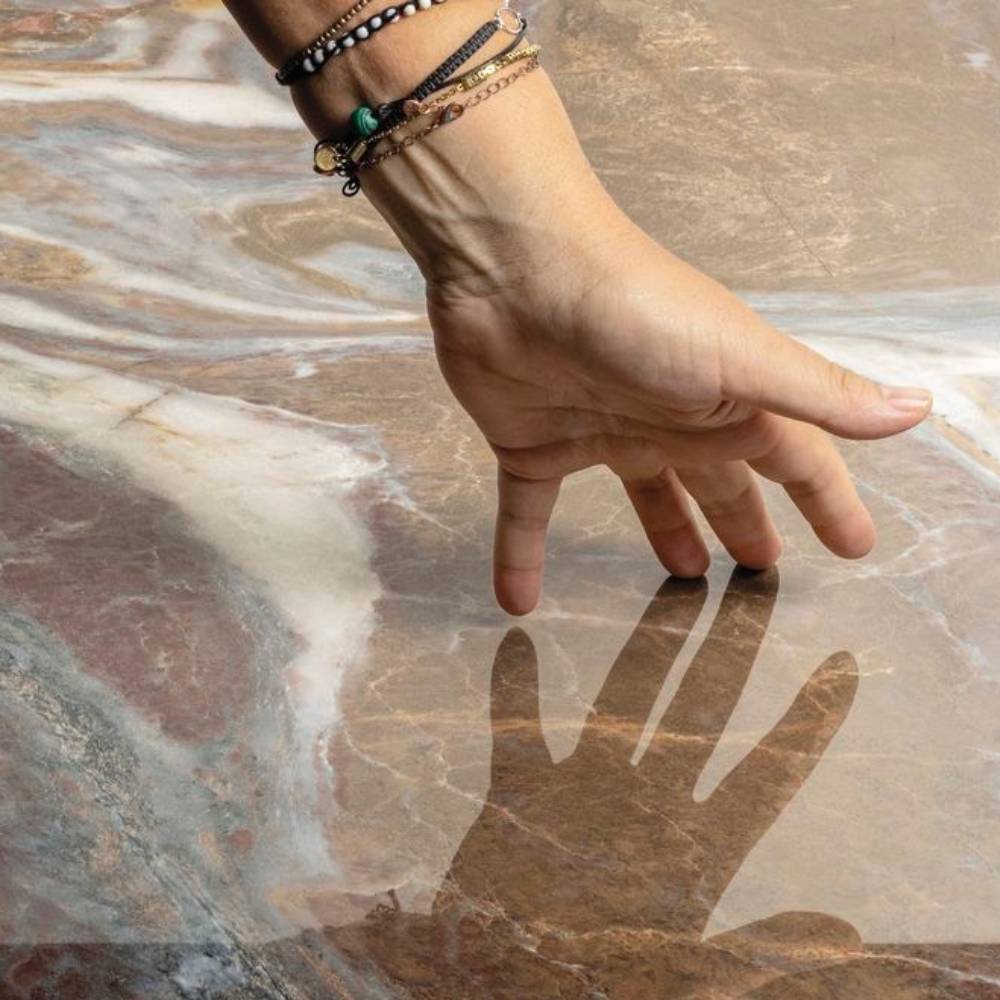
A polished finish is the most refined and widely recognized finish used in the natural
stone industry. It is achieved by progressively grinding the stone with increasingly
fine abrasive pads until the surface becomes exceptionally smooth and reflective.
The final polishing stage creates a mirror-like sheen that enhances the stone’s
natural colors, veining, and crystalline structure.
Polishing is commonly applied to marble, granite, quartzite, onyx, and many dense
limestones. Because the process closes much of the stone’s surface pores, polished
stone is generally easier to clean and offers improved resistance to moisture
penetration when properly sealed.
Characteristics
A polished finish emphasizes the richness of the stone by increasing color saturation
and highlighting intricate mineral patterns. The reflective surface creates a sense of
depth and luxury, making spaces appear brighter and more spacious.
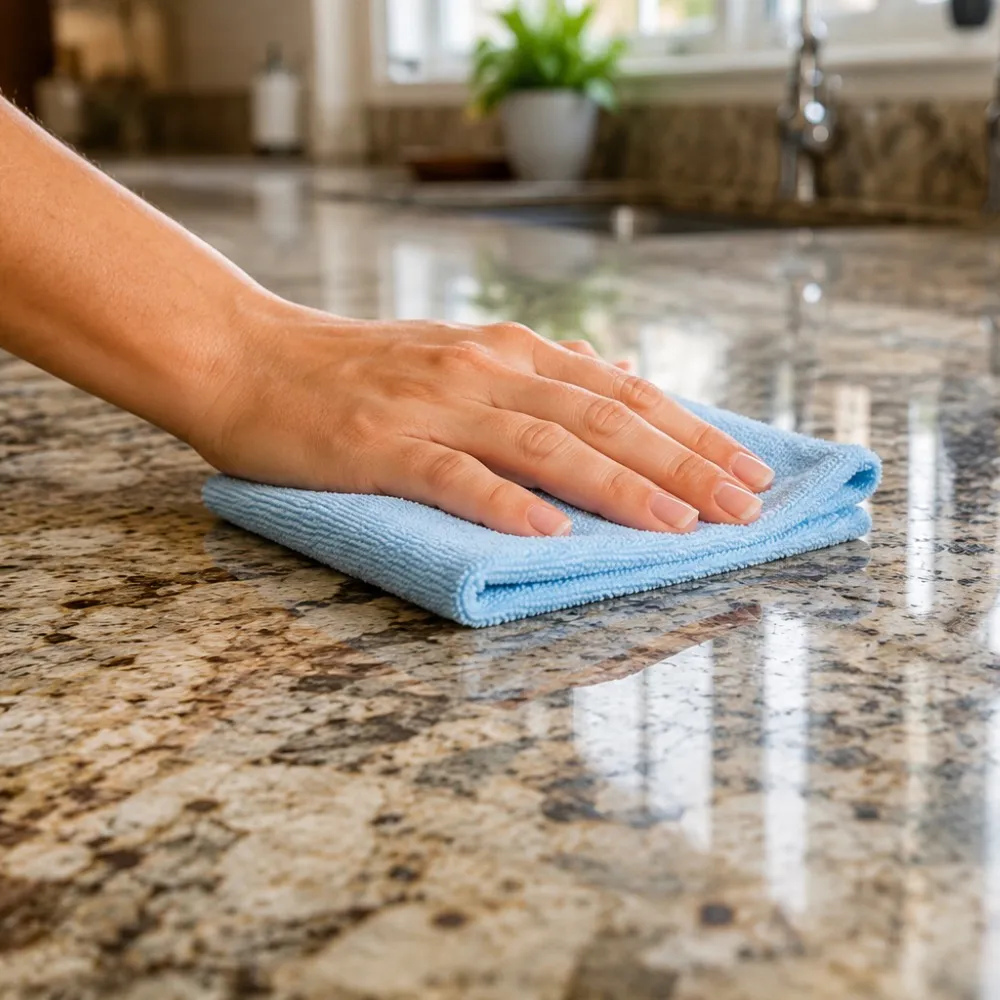
Although polished stone is exceptionally attractive, the smooth surface provides less
traction than textured finishes, particularly when wet. For this reason, polished
flooring is generally recommended for dry interior environments rather than
exterior applications.
Advantages
Maximizes the stone’s natural color, veining, and depth.
Creates a luxurious, elegant appearance suitable for premium projects.
Smooth surface is easy to clean and maintain.
Reflects natural and artificial light, enhancing interior brightness.
Ideal for showcasing decorative stones with dramatic patterns
Disadvantages
Can become slippery in wet conditions.
Surface scratches are more visible than on textured finishes.
May require occasional professional repolishing in high-traffic areas.
Generally unsuitable for exterior paving or wet public walkways.
Suitable Stone Types
- MarbleGranite
- Quartzite
- Onyx
- Dense Limestone
Best Applications
- Luxury residential flooring
- Hotel lobbies
- Reception areas
- Kitchen countertops
- Bathroom vanity tops
- Interior wall cladding
- High-end retail spaces
Honed Finish
A honed finish is produced by grinding the stone to a smooth, flat surface without
completing the final polishing stages. The result is a matte or satin finish that offers
a softer, more natural appearance while preserving the stone’s elegance.
Unlike polished stone, honed surfaces diffuse light rather than reflect it, creating a
subtle and contemporary aesthetic that has become increasingly popular in modern
residential and commercial architecture.
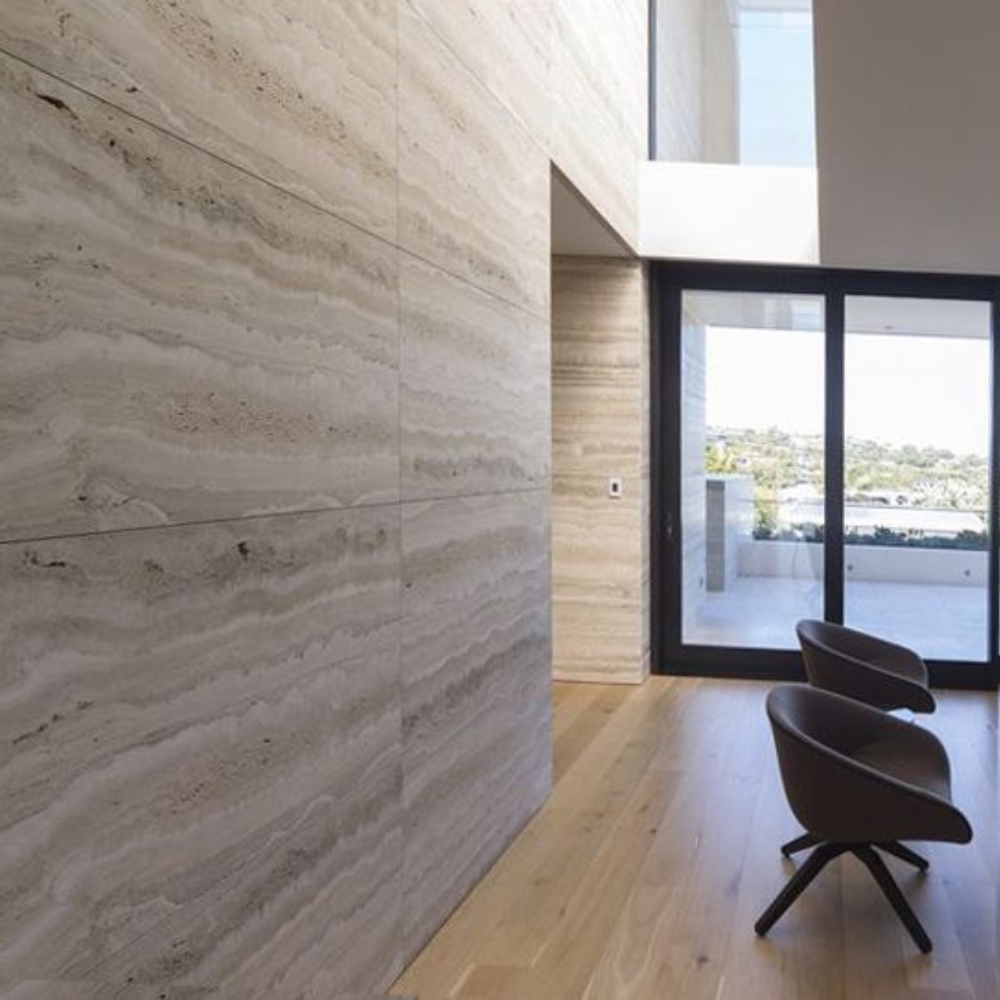
Honed finishes are suitable for a wide range of stones, including marble, limestone,
travertine, granite, and quartzite.
Characteristics
The matte surface reduces glare and provides greater slip resistance than polished
stone, making it a preferred choice for areas where safety is an important consideration. Because the finish does not intensify color to the same extent as
polishing, the stone appears softer and more understated.
Honed finishes can also conceal minor scratches and everyday wear more
effectively, making them particularly suitable for busy households and commercial
environments.
Advantages
Elegant matte appearance with timeless appeal.
Better slip resistance than polished stone.
Hides minor scratches and wear.
Suitable for contemporary and traditional designs.
Comfortable underfoot for large flooring installations.
Disadvantages
- Colors and veining appear less vibrant than polished finishes.
- More susceptible to staining if not properly sealed.
- Requires periodic sealing, particularly on porous stones.
Suitable Stone Types
- Marble
- Limestone
- Travertine
- Granite
- Quartzite
Best Applications
- Residential flooring
- Commercial flooring
- Kitchens
- Bathrooms
- Staircases
- Wall cladding
- Hospitality and office interiors
Leathered Finish
A leathered finish is created by first honing the stone and then treating its surface
with specialized diamond-tipped brushes. This process gently removes the softer
minerals while preserving the stone’s natural contours, resulting in a textured
surface with a soft, low-sheen appearance. Unlike a polished finish, a leathered
surface is not reflective, yet it enhances the stone’s natural movement and mineral
composition by adding depth and texture.
Originally developed for granite, leathered finishes are now also widely applied to
quartzite, marble, and certain dense limestones. The finish has gained significant
popularity in contemporary architecture and interior design due to its sophisticated
appearance and practical performance.
Characteristics
A leathered finish provides a unique tactile experience, combining the elegance of
natural stone with a subtle texture that feels warm and organic. The surface retains
much of the stone’s natural color while minimizing glare, making it suitable for both
modern and classic interiors.
Because of its textured surface, leathered stone offers better slip resistance than
polished finishes and is more effective at concealing fingerprints, water spots, and
minor scratches. These qualities make it an excellent choice for surfaces that
experience frequent daily use.
Advantages
- Distinctive texture with a refined, natural appearance.
- Enhances the depth and character of the stone.
- Better slip resistance than polished surfaces.
- Conceals fingerprints, smudges, and water spots.
- More resistant to visible scratches and everyday wear.
- Ideal for high-use residential and commercial spaces.
Disadvantages
- Slightly more difficult to clean than polished surfaces.
- Textured areas may trap dust or residue if not cleaned regularly.
- Production costs are generally higher due to the additional finishing process.
- Not available for every type of natural stone
Suitable Stone Types
- Granite
- Quartzite
- Marble (selected varieties)
- Dense limestone
Best Applications
- Kitchen countertops
- Bathroom vanity tops
- Reception desks
- Dining tables
- Feature walls
- Luxury residential interiors
- Commercial hospitality projects

Flamed Finish
A flamed finish, also known as a thermal finish, is produced by exposing the stone
surface to an intense high-temperature flame followed by rapid cooling. The sudden
thermal shock causes the surface crystals to expand and fracture, creating a rough,
textured finish with exceptional slip resistance.
This process is primarily used on granite and other hard siliceous stones because
their mineral composition can withstand rapid heating. Softer stones such as marble
and limestone are generally unsuitable for this finishing technique due to the risk of
cracking or thermal damage.
Characteristics
A flamed finish creates a coarse, natural texture that significantly improves traction
under both dry and wet conditions. During the process, some darker minerals may
be removed from the surface, causing the stone to appear slightly lighter than its
original color.
The rough texture also reduces glare and provides excellent resistance to
weathering, making flamed stone one of the most reliable choices for demanding
exterior environments.
Advantages
- Exceptional slip resistance.
- Excellent durability in outdoor environments.
- Resistant to rain, frost, and temperature fluctuations.
- Low maintenance.
- Ideal for heavy pedestrian traffic.
- Natural, rugged appearance.
Disadvantages
- Primarily suitable for granite and similar hard stones.
- Surface color may become lighter after flaming.
- Rough texture can collect dirt in exposed environments.
- Not suitable where a smooth decorative finish is desired.
Suitable Stone Types
- Granite
- Basalt
- Selected quartzites
Best Applications
- Outdoor paving
- Public plazas
- Sidewalks
- Pool surrounds
- Driveways
- Exterior staircases
- Commercial entrances
Bush-Hammered Finish
A bush-hammered finish is produced by repeatedly striking the stone surface with a
specialized hammer fitted with multiple hardened steel or carbide points. This
mechanical process creates a uniformly textured surface with small indentations
distributed evenly across the stone.
The intensity of the texture can be adjusted depending on the desired appearance
and functional requirements. Light bush hammering produces a subtle texture, while heavier treatment creates a much rougher surface with maximum slip
resistance.
Bush hammering is commonly used on granite, limestone, sandstone, and certain
marbles for projects requiring durability and pedestrian safety
Characteristics
The bush-hammered finish creates a highly textured surface that performs
exceptionally well in wet or high-traffic environments. The finish reduces glare and
gives the stone a natural architectural appearance that complements both
traditional and contemporary landscape designs.
Its excellent durability and weather resistance make it particularly suitable for public
infrastructure and exterior architectural applications.
Advantages
Outstanding slip resistance.
Extremely durable under heavy use.
Excellent weather resistance.
Reduces surface glare.
Long service life with minimal maintenance.
Suitable for demanding public and commercial projects
Disadvantages
- Rough surface can retain dirt, dust, and organic debris.
- More difficult to clean than smooth finishes.
- Not typically chosen for refined luxury interiors.
- Additional processing may increase manufacturing costs.
Suitable Stone Types
- Granite
- Limestone
- Sandstone
- Selected marbles
Best Applications
- Public walkways
- Exterior staircases
- Urban landscapes
- Parks
- Commercial entrances
- Streetscapes
- Civic and institutional projects
Design Considerations
When selecting between leathered, flamed, and bush-hammered finishes, the
decision should be based on both aesthetics and performance.
A leathered finish is ideal when a project requires a refined appearance combined
with improved practicality for interior applications.
A flamed finish is the preferred solution for outdoor paving where maximum slip
resistance and weather durability are essential.
A bush-hammered finish is best suited for high-traffic public spaces, infrastructure
projects, and landscapes where safety, durability, and long-term performance are
the primary priorities.
Understanding the characteristics of these finishes allows architects, designers, and
builders to specify the most appropriate surface for each project, ensuring that
natural stone performs as beautifully as it looks.
Sandblasted Finish
A sandblasted finish is created by directing high-pressure abrasive particles, typically
silica sand or other suitable media, onto the surface of the stone. This controlled
abrasion removes a thin layer of material, resulting in a finely textured, matte
surface. The intensity of the finish can be adjusted by varying the blasting pressure,
abrasive type, and duration of the process.
Sandblasting is commonly applied to granite, limestone, sandstone, marble, and
other natural stones where a subtle texture and improved slip resistance are
desired. It is widely used in both contemporary and traditional architecture due to
its clean appearance and functional performance.
Characteristics
Unlike heavily textured finishes such as bush-hammered or flamed stone,
sandblasting creates a finer and more uniform surface. The finish softens the
stone’s appearance by reducing surface gloss while preserving much of its natural
color and pattern. Because the process slightly opens the stone’s surface, proper
sealing is recommended, particularly for porous materials.
The matte texture reduces glare and provides better traction than polished finishes,
making sandblasted stone suitable for applications where safety and visual comfort
are important.
Advantages
- Uniform and consistent surface texture.
- Improved slip resistance compared to polished stone.
- Reduces glare from sunlight and artificial lighting.
- Creates a contemporary architectural appearance.
- Suitable for both interior and exterior applications.
- Can be combined with other finishes to create decorative patterns.
Disadvantages
- May slightly reduce the intensity of the stone’s natural color.
- Fine texture can accumulate dust and dirt over time.
- Porous stones require proper sealing after finishing.
- Excessive sandblasting may soften delicate surface details.
Suitable Stone Types
- Granite
- Limestone
- Sandstone
- Marble
- Quartzite
Best Applications
- Building façades
- Exterior wall cladding
- Landscape architecture
- Public plazas
- Memorials and monuments
- Commercial entrances
- Decorative paving
Brushed Finish
A brushed finish is achieved by treating the stone surface with rotating steel or
diamond brushes after it has been honed or lightly textured. The brushing process gently removes softer minerals while preserving the harder components, creating a
surface that is smooth to the touch yet subtly textured.
This finish enhances the stone’s natural character without producing the high
reflectivity associated with polishing. It has become increasingly popular in
residential and hospitality projects where designers seek a balance between
elegance and practicality.

Characteristics
Brushed stone has a soft, weathered appearance that highlights the natural
movement and texture of the material. The finish produces a low-sheen surface that
feels warm and comfortable underfoot while maintaining much of the stone’s
original beauty.
Compared to polished stone, brushed surfaces offer improved slip resistance and
are better at disguising minor scratches, making them particularly suitable for
frequently used spaces.
Advantages
- Warm and natural appearance.
- Comfortable surface for walking.
- Better slip resistance than polished finishes.
- Conceals everyday wear and minor scratches.
- Creates a timeless and sophisticated aesthetic.
- Suitable for both contemporary and traditional designs
Disadvantages
- Textured surface may retain fine dust and dirt.
- Requires periodic cleaning to preserve its appearance.
- Less reflective than polished stone.
- May require sealing depending on the stone type.
Suitable Stone Types
- Marble
- Limestone
- Travertine
- Granite
- Quartzite
Best Applications
- Residential flooring
- Hotel interiors
- Restaurants
- Living rooms
- Hallways
- Interior wall cladding
- Hospitality projects
Tumbled Finish
A tumbled finish is produced by placing cut stone pieces into large rotating drums
together with abrasives, water, and small stones. As the materials rotate, the edges
become rounded and the surface develops a naturally aged appearance. This
process recreates the effect of decades of natural weathering, giving the stone a
timeless character.
Tumbled finishes are particularly popular for limestone, marble, and travertine,
although certain sandstones can also be processed using this technique. The result
is a rustic finish that complements both traditional and Mediterranean-style
architecture.
Characteristics
The tumbling process softens sharp edges and creates a gently textured surface
with subtle variations. Rather than emphasizing high gloss or vibrant color, the finish
highlights the stone’s natural warmth and authenticity.
Because the process increases surface porosity, tumbled stone generally requires
sealing to protect it from moisture, staining, and everyday wear. Despite this, it
remains one of the most popular finishes for projects seeking a relaxed and timeless
appearance.
Advantages
- Authentic aged appearance.
- Warm and inviting character.
- Rounded edges improve comfort.
- Good slip resistance.
- Ideal for traditional and rustic architecture.
- Each piece develops a unique natural finish.
Disadvantages
- More porous than polished or honed finishes.
- Requires sealing and regular maintenance.
- Surface may collect dirt more easily.
- Not suitable where a sleek contemporary appearance is desired.
Suitable Stone Types
- Travertine
- Marble
- Limestone
- Sandstone
Best Applications
- Garden pathways
- Patios
- Courtyards
- Bathroom flooring
- Pool surrounds
- Rustic interiors
- Mediterranean-style architecture
Design Considerations
Sandblasted, brushed, and tumbled finishes each offer a distinct balance of
aesthetics and functionality.
A sandblasted finish is well suited to projects requiring a clean, uniform appearance
with improved slip resistance, making it a reliable choice for exterior paving,
façades, and public spaces.
A brushed finish combines subtle texture with a refined appearance, making it
particularly suitable for residential interiors, hospitality projects, and commercial
environments where comfort and understated elegance are priorities.
A tumbled finish is the preferred option for projects seeking an aged, traditional
aesthetic. Its weathered character, rounded edges, and natural texture make it
especially popular in garden landscapes, heritage renovations, and Mediterranean-
inspired designs.
Selecting the appropriate finish should always take into account the stone type,
intended application, environmental conditions, maintenance requirements, and
overall architectural vision. A carefully chosen finish not only enhances the beauty of
natural stone but also ensures long-term performance and durability.